

National First Prize: Embodied Intelligence Meets a Leading University
A joint BUPT and SFLARE team won first prize at the 28th China Robot and Artificial Intelligence Competition national finals.
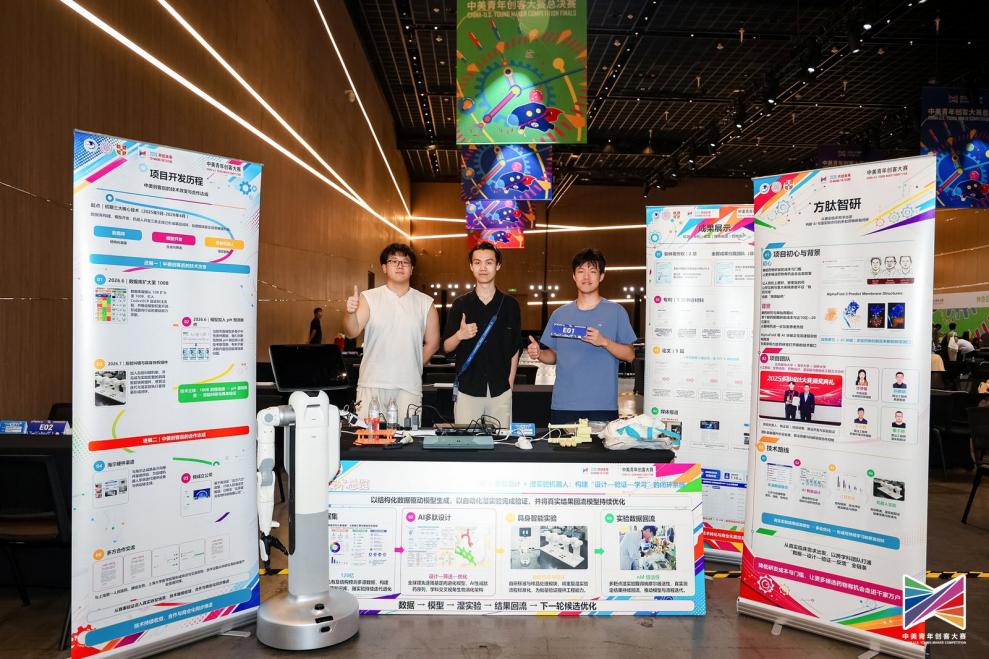
At the national finals of the 28th China Robot and Artificial Intelligence Competition, the Unmanned Systems Embodied Perception and Computing team from Beijing University of Posts and Telecommunications joined SFLARE Robotics to develop an on-device model deployment system built on SFLARE's embodied intelligent robot. The joint entry earned first prize in the national finals.
One of China's longest-running and most influential robotics and AI academic competitions, the event covers innovation, application, athletics, and challenge categories. Only about 15% of entrants receive a national first prize.
How Did Our Robot Work Closely with a Leading University?
This was not a simple algorithm port or hardware integration. SFLARE supplied an open architecture, production-grade hardware, and device–cloud collaboration for real execution and efficient deployment. The university team designed algorithms, trained models, and adapted them to the competition tasks. From solution design and interface integration to live validation, both sides worked together so laboratory models could run on real machines rather than remain in simulation.
Our Capabilities
- Human-like robotic arm: a lightweight 3.8 kg design supports teleoperation demonstrations and autonomous planning, giving complex VLA vision-language-action models a real execution platform.
- On-device compute foundation: PULSE-based device–cloud collaboration reduces dependence on the cloud and delivers low-latency local inference, accelerating on-device performance by 2.2 times.
- Autonomous SLAM navigation: multisensor fusion supports mapping, route planning, and dynamic obstacle avoidance in complex environments.
- Open APIs and engineering interfaces: standardized software and hardware interfaces let university teams connect their own algorithms without building a robot from scratch.
From Algorithm to Real-Robot Deployment
To address the power use and latency of on-device VLA models, the BUPT team proposed FDBPL rapid distillation prompt learning and data sparsification. Using the PULSE architecture, robot hardware, and open interfaces, the teams completed device–cloud deployment, software–hardware integration, and real-robot validation.
They formed three core technologies across algorithm efficiency, on-device deployment, and physical execution:
- Space–time conversion and device–cloud collaboration turn complex large-model reasoning into fast on-device lookup, eliminate repeated computation, and enable millisecond response.
- Sparse label compression uses Top-K edge smoothing and renormalization to compress high-dimensional features, reducing memory and I/O overhead on resource-constrained devices.
- Minimal-parameter fine-tuning freezes the large-model backbone and uses a small amount of prompt learning for scenario adaptation. With SFLARE's open APIs, one robot can switch quickly between tasks without retraining the entire model.
In short, the algorithm decides what to do and how to decide efficiently; SFLARE solves stable execution and engineering deployment. Their integration brings frontier models into the physical world.
Mass Production Is the Best Test of Technology
On July 27, SFLARE officially entered mass production.
The robot platform carrying these advanced algorithms is becoming a standardized product, moving toward more homes and scenarios that need machines able to understand people and complete complex tasks.
Algorithms keep improving, the technology is maturing, and products are being delivered.